

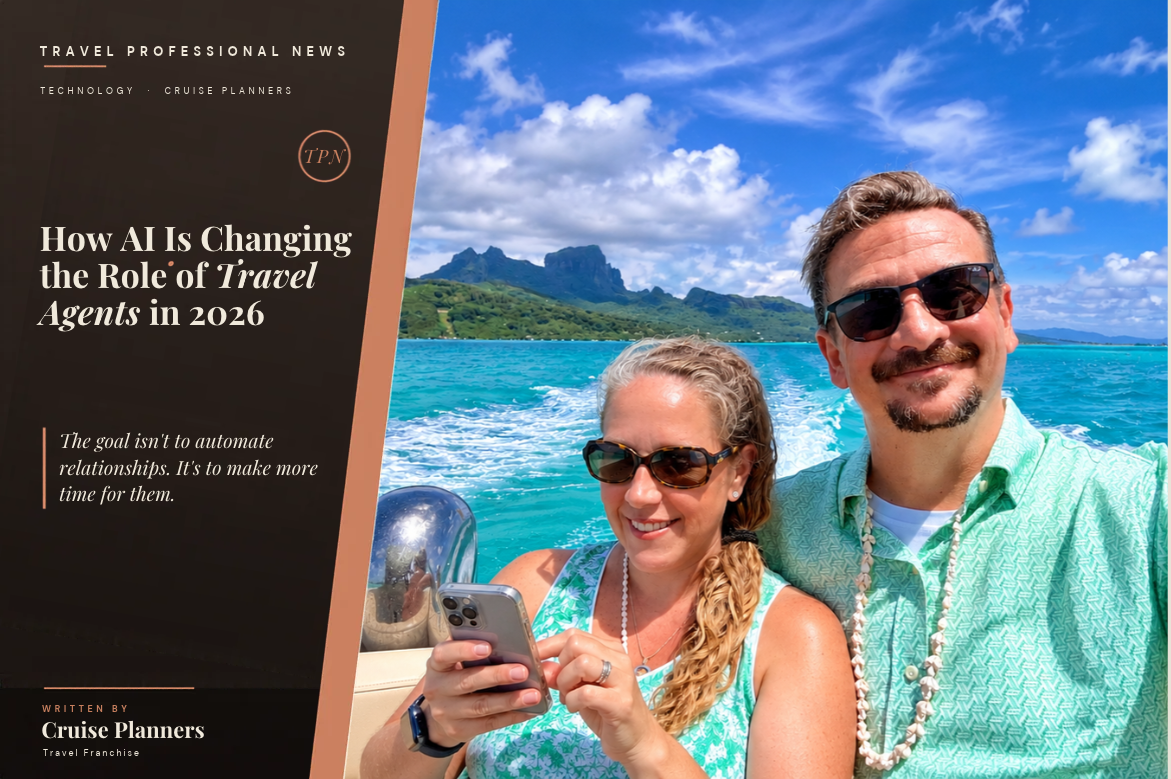
AI Gives Travelers More Information Than Ever. It Does Not Give Them Better Judgment.
Written By: Cruise Planners

A traveler asks an AI assistant to plan a seven-night Caribbean cruise. Within seconds, they have destination suggestions, cruise line comparisons, and a sample itinerary.
So where does that leave the travel advisor?
In a potentially stronger position than ever, provided they understand what today’s travelers actually need.
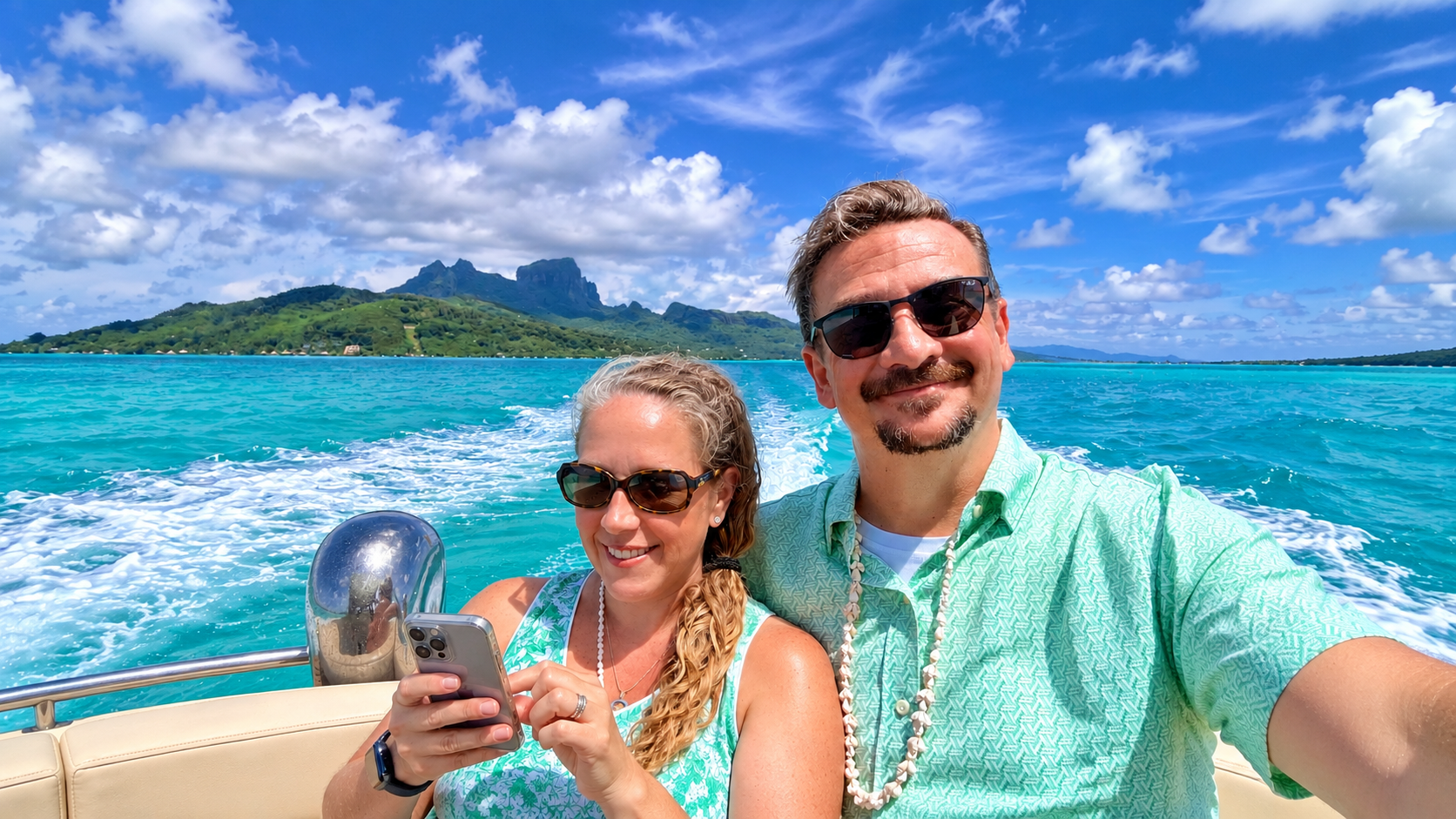
Cruise Planners franchise owners in Tahiti for the 2026 Elite Summit, with one owner working from her phone using Cruise Planners technology.
Artificial intelligence is changing how consumers discover and research vacations. But access to more information doesn’t automatically translate into better travel decisions.
For travel advisors, the opportunity isn’t to compete with AI at producing information. It’s to deliver the expertise, personalization, and confidence that turn travel inspiration into a well-planned vacation.
AI Is Changing Travel Planning, Not Eliminating the Need for Advisors
Travelers can now research destinations, compare accommodations, and generate itineraries with unprecedented speed.
But AI-generated recommendations can lack important context.
A family comparing Caribbean cruises may receive suggestions based on price and itinerary without understanding differences in onboard experiences, connecting stateroom availability, dining options, or suitability for young children.
A couple researching luxury river cruises may find dozens of options but struggle to identify which experience best matches their expectations.
These are opportunities for knowledgeable travel advisors.
The advisor’s value lies in interpreting information, asking the right questions, identifying potential problems, and recommending experiences based on individual preferences.
The future of travel advisors depends less on access to information and more on the ability to turn that information into personalized recommendations.
1. Make Personalization Your Competitive Advantage
AI can generate a vacation itinerary. A skilled travel advisor can understand why a particular vacation matters.
Is the client celebrating a milestone anniversary? Traveling with multiple generations? Looking for a relaxing escape after a demanding year?
These details influence recommendations in ways that generic search results may overlook.
Travel advisors who consistently document client preferences, travel history, special occasions, and feedback can deliver increasingly personalized service.
This is where customer relationship management technology becomes essential.
Rather than relying on memory or scattered notes, advisors can use an organized travel agent CRM to build meaningful client profiles and identify future travel opportunities.

Lashandrea Young, a Cruise Planners franchise owner since 2016, leads a group trip to Bali.
2. Become the Expert Travelers Can Trust
As AI makes travel information easier to access, professional expertise becomes an increasingly important differentiator.
Travelers don’t necessarily need someone to tell them that Alaska cruises exist. They need someone who can explain the differences between itineraries, help evaluate cruise lines, and recommend experiences that fit their priorities.
Specialization can strengthen that value.
Advisors who develop expertise in luxury cruises, family vacations, destination weddings, river cruising, or other travel niches can position themselves as trusted specialists rather than general booking resources.
The objective is simple: Give clients a compelling reason to seek your professional judgment instead of relying exclusively on automated recommendations.
3. Use Technology to Strengthen Relationships, Not Replace Them
One of the biggest opportunities for travel agency business growth is using technology to handle repetitive work while preserving the personal service that builds loyalty.
Automated follow-ups, targeted marketing campaigns, organized client records, and streamlined communications can help advisors maintain consistent engagement.
At Cruise Planners, this philosophy is reflected in CP Maxx, the company’s proprietary travel advisor technology platform.
CP Maxx integrates essential business functions, including client management, booking tools, marketing resources, and reporting.
Cruise Planners has also introduced AI-powered capabilities, including Maxx Intelligence, designed to support advisors with tasks such as creating personalized marketing content.
The goal isn’t to automate relationships. It’s to make more time for them.
When technology supports daily operations, advisors can concentrate on client consultations, recommendations, and experiences that encourage repeat business.
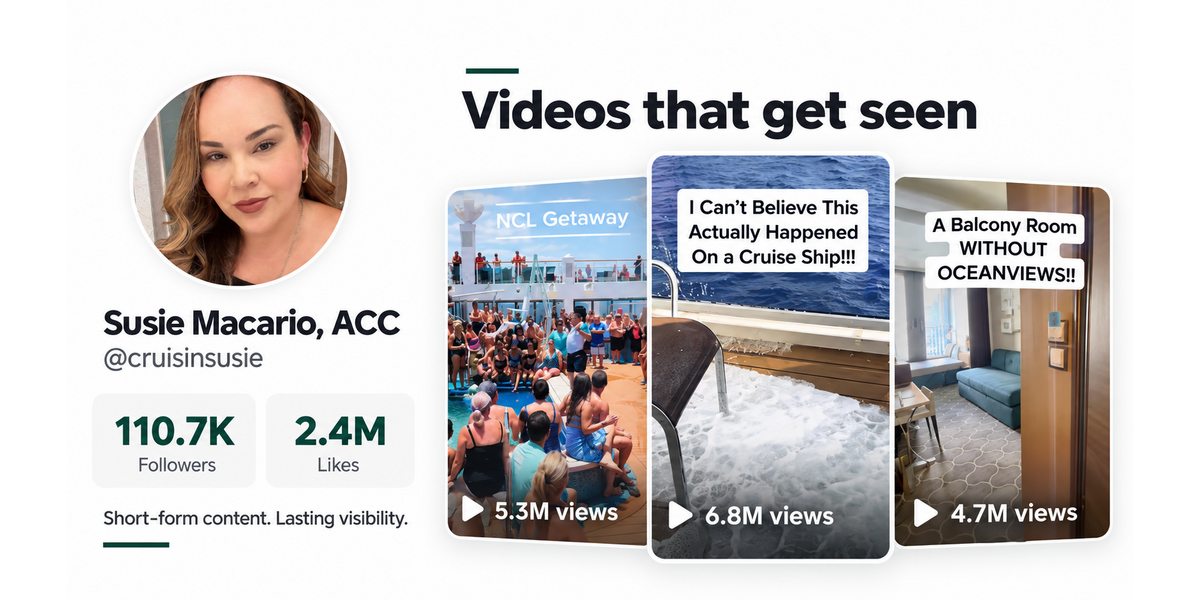
Susie Flores, a Cruise Planners franchise owner since March 7, 2025, uses TikTok to generate 90% of her sales.
4. Stay Visible Before Travelers Are Ready to Book
AI is also influencing how travelers discover businesses and evaluate recommendations.
For travel advisors, this reinforces the importance of a consistent digital presence.
An effective travel agent marketing strategy should communicate expertise across multiple channels, including websites, social media, email marketing, and educational content.
Instead of simply promoting vacation deals, advisors can answer the questions potential clients are already asking.
Examples include:
- What is the best cruise line for a multigenerational family?
- Is a travel advisor worth using for a luxury vacation?
- How far in advance should travelers book an Alaska cruise?
- What should first-time river cruisers know?
Helpful, specific content creates opportunities to demonstrate expertise and become part of a traveler’s decision-making process.
5. Choose a Business Model That Supports Innovation
Technology will continue evolving, and independent travel business owners must decide how they will keep pace.
Some advisors prefer researching, purchasing, and integrating individual software solutions themselves. Others want access to an established business infrastructure.
Cruise Planners offers a travel franchise model that combines independent business ownership with proprietary technology, marketing resources, supplier relationships, training, and ongoing business development support.
For advisors evaluating their next stage of growth, the question isn’t simply which tools are available today.
It’s whether their business model provides the resources, guidance, and adaptability needed to remain competitive tomorrow.
The Future Belongs to Advisors Who Combine Technology with Human Expertise
AI will continue changing how travelers research vacations. But technology alone doesn’t build trust, understand personal priorities, or replace the reassurance of having an experienced professional to turn to when plans change.
The most competitive travel advisors will be those who embrace innovation while strengthening the relationships that make their services valuable.
The opportunity isn’t to become more like AI. It’s to become an even better travel advisor because of it.
At Cruise Planners, we’re committed to helping travel entrepreneurs combine the independence of business ownership with the technology, marketing, and support to build for the future.
Ready to explore what’s next for your travel business?