

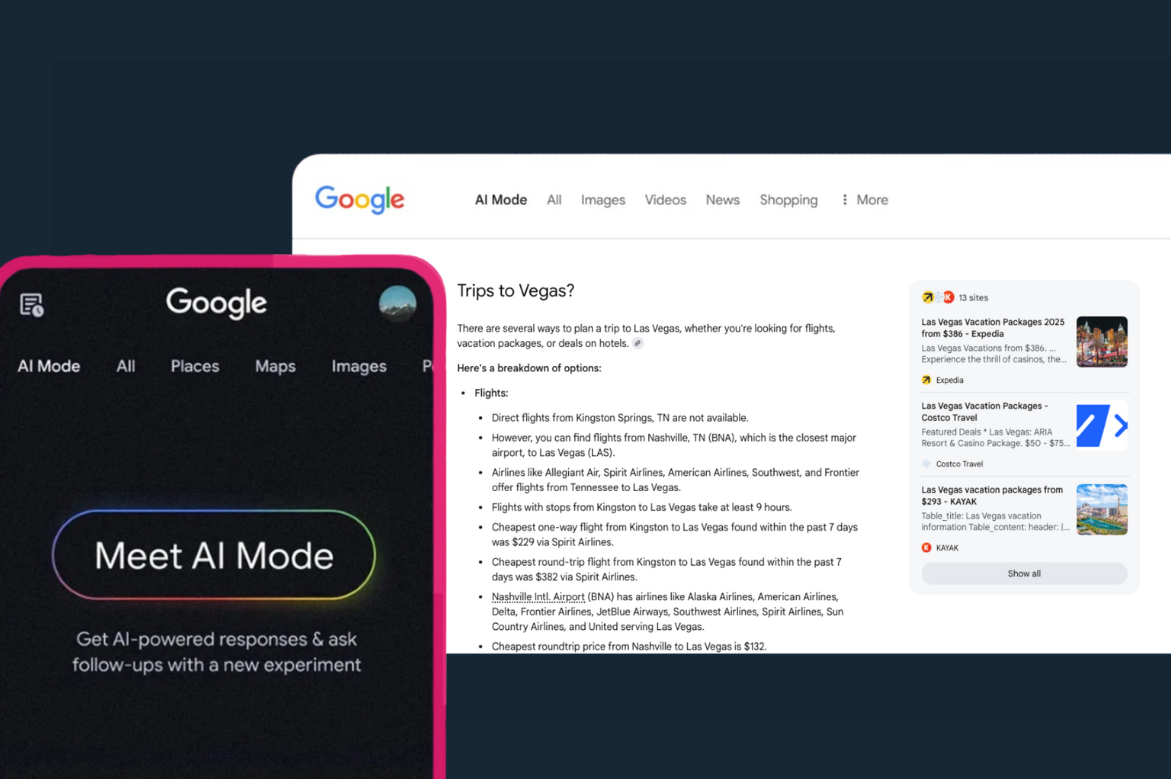
As AI-powered search increasingly influences demand, Propellic warns that travel brands must evolve beyond isolated SEO and paid media efforts to ensure consistent visibility across search, recommendations, and assistant-led ecosystems.
Austin, TX, 12 January 2026. Propellic, the travel-focused performance marketing agency managing global digital initiatives for leading brands, unveils the AI Travel Megatrends 2025 and 2026 playbook, a comprehensive look at how AI is transforming travel businesses across the entire funnel, from search to paid media. The analysis highlights five major trends shaping travel marketing strategies in 2025, along with an outlook on what to expect in 2026.

In this context, AI Visibility and full-funnel integration emerge as strategic priorities for travel brands. As AI-powered search increasingly influences demand, Propellic warns that travel brands must evolve beyond isolated SEO and paid media efforts to ensure consistent visibility across search, recommendations, and assistant-led ecosystems. Organizations that act decisively will be better positioned to drive sustainable growth, protect revenue, and maintain competitive advantage in 2026.
“AI isn’t coming for travel search in 2026- it’s already here. The only question left is: are you doing what it takes for your travelers to find you?” states Emily Souydalay, Associate SEO director at Propellic.
AI travel Megatrends: from clicks to conversations
Propellic has identified five key megatrends that shaped the travel industry in 2025 and will continue to drive change in 2026:
1. AI surfaces became the new Top of Funnel: The traditional “ten blue links” model gave way to AI-generated answers, with zero-click searches rising to nearly 60% and causing 15–25% drops in organic traffic for many travel sites. By the end of 2025, over half of first-page travel keywords triggered a Google AI Overview, making AI-surface visibility essential. Moreover, Propellic found that in AI Mode, over 50% of bookings went directly to property or activity owners, while OTAs captured under 10%. Last but not least, Google and AI engines increasingly prioritized “Experience,” with reviews, user-generated content (UGC), and traveler accounts serving as key authority signals.
2. Content quality is now defined by structure, not length: In 2025, AI-driven search increasingly evaluates content based on structure rather than sheer length. Pages that are modular, scannable, and organized around codified facts are rewarded in AI Overviews. Moreover, proper hierarchical organization of headings, from H1 to H2 to H3 and beyond, is essential, as large language model (LLM) bots rely on these structures to extract and synthesize information quickly for AI-generated answers.
3. Local & experience-based travel searches shifted hard toward “contextual intent”: In 2025, we saw a shift toward “Niche Communities.” Generic keywords like “best hotels in Tokyo” remain valuable, however, hyper-specific clusters like “Tokyo hotels with vinyl listening rooms” or “solo-parent wellness retreats in Bali” dramatically grew in value. In this sense, Propellic has seen success with including content specifically targeting personas and niche audiences in both AI Overviews and other AI surfaces.
Furthermore, optimized Google Business Profiles where businesses truly engage with local customers are more important and impactful than ever.
In fact, Propellic’s first-of-its-kind behavioral study of Google AI Mode use for travel, showed that AI Mode sessions included a click to a Google Business Profile 46% of the time.
4. Technical foundations became a revenue multiplier: Travel brands with clean site architecture, lightweight JavaScript, and AI-accessible product data gained a competitive edge. Booking engines exposing real-time availability via APIs (e.g., Ventrata, Fareharbor, Bokun, Checkfront) amplified this advantage. Furthermore, headless CMS platforms like Contentful combined with frameworks such as React or Next.js enabled dynamic sites, but heavy client-side JavaScript without server-side rendering hurt visibility in AI-driven search. As a result, structured technical foundations plus AI-ready data became a key differentiator and revenue driver.
5. GEO (Generative Engine Optimization) became the missing layer in most SEO programs: Generative Engine Optimization, or GEO, emerged as the crucial next step in SEO by making brands more visible and citable to large language models. Unlike traditional SEO, GEO emphasizes entity recognition and semantic relationships, shaping how a brand is understood and referenced across AI-driven surfaces. Brands that invested early in entity modeling, persona-level intent coverage, and structured, answer-ready content were able to dominate AI Overviews and other recommendation surfaces. This approach proved particularly effective for tours, activities, and multi-day operators, where clearly defined products, attributes, and real-time availability enable LLMs to confidently compare options and provide recommendations.
2026 Outlook: AI at the Center of Travel Discovery and Conversion
Looking ahead to 2026, Propellic expects artificial intelligence to further solidify its role as the core of travel discovery and conversion. Search and advertising will increasingly move beyond keyword dependence, shifting toward intent signals derived from conversational interactions and intelligent assistants. At the same time, AI-native advertising, embedded directly within assistant responses—such as product or destination recommendations in ChatGPT or Gemini—will begin to scale, unlocking new demand-capture opportunities.
Cross-channel attribution will become a critical competitive advantage. Leading brands will connect search, social, video, CTV, and offline data into a unified measurement framework, transforming insights into more precise and effective investment decisions. Meanwhile, video and CTV channels will evolve from upper-funnel support to become core performance drivers, accelerating conversion and increasing brand impact.
Additionally, the industry will move closer to agentic AI, where assistants do more than answer queries—they plan and book entire trips on behalf of travelers. AI is no longer just another channel; it has become the primary interface between travelers and information, and visibility across these systems will define competitive advantage.
“In 2026, the brands that succeed will be the ones AI can understand, evaluate, and confidently recommend. That means adapting content, technical infrastructure, and entity signals to ensure presence across all discovery engines—from Google to voice assistants and conversational environments. AI is no longer just another channel: it is the gateway to the travel experiences of the future. The companies that act now will be the ones travelers actually see, choose, and book,” concluded Brennen Bliss, CEO and Founder at Propellic.